
FACES OF PERSEVERANCE
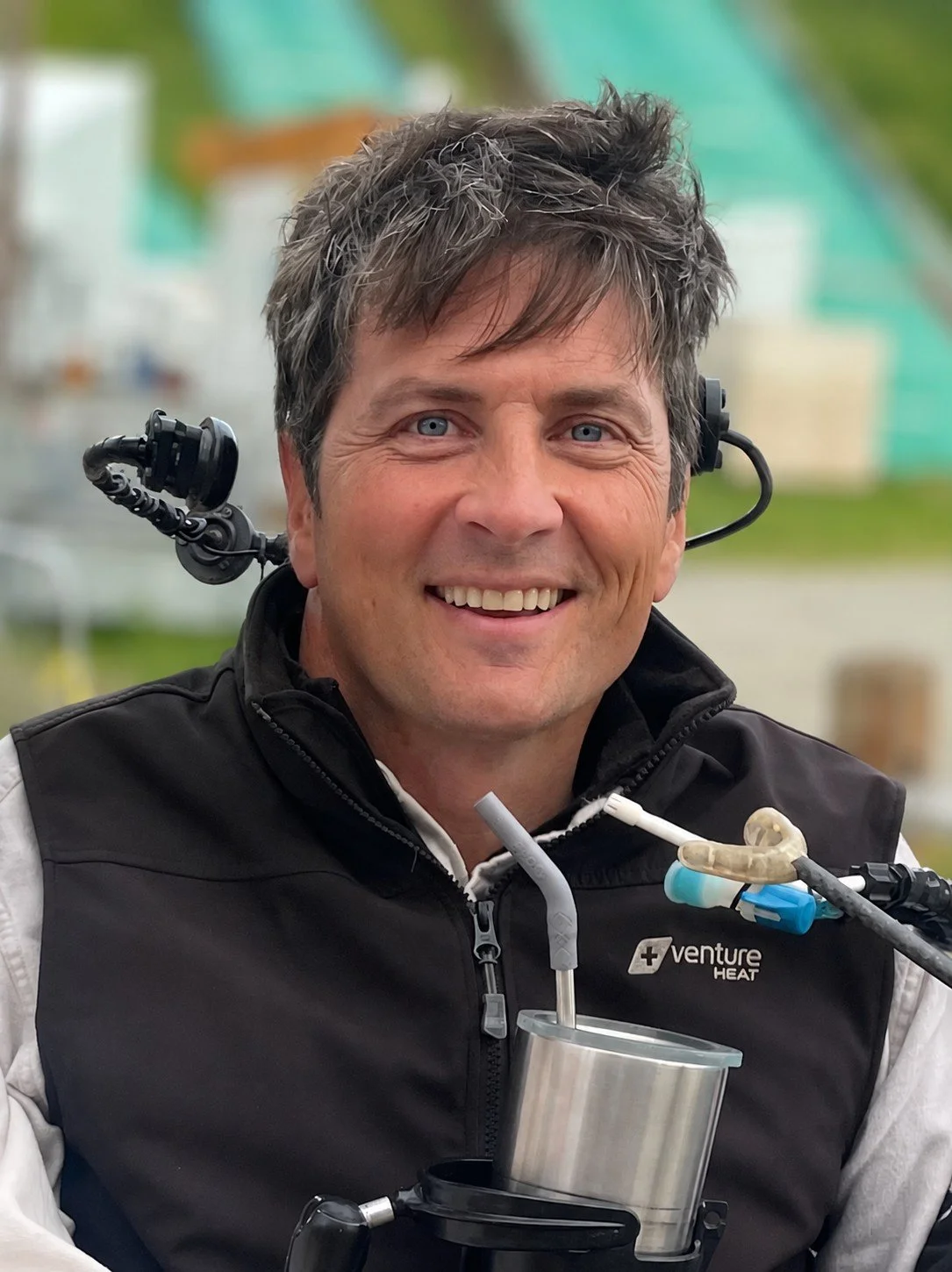
Name: Wes Price
Age: 44
Residence: Oregon
Level of Injury: C3-C4 Quadriplegic
Occupation: President of Bonus Years, Inc.
Date of Interview: August 7, 2025
1. Could you tell me your name? Where you're from, and share the introduction to your story?
Yes, my name is Wes Price. I grew up in eastern Oregon, in a town called Pendleton, famous for the Pendleton Roundup Rodeo. Also, I do claim Alaska as part of my, where I'm from, I spent 13 years there, the beginning of my adult life, after college, and it's an amazing place with some great friends that we continue to keep. Although we moved away from there in 2016 and relocated back to Eastern Oregon to be with family. I spent 4 years, in Corvallis, Oregon, going to Oregon State University. The intro to my story would be, you know, going back to a wonderful childhood. Great family, mom and dad that were rock solid and four boys. I have three brothers. I'm number three of four, and I couldn't have asked for a better upbringing. It was a Christian home that we grew up in.
I came to know the Lord probably when I was 12 years old, and although biblical teaching could have been a lot more solid from my folks, you know, it was enough, and God had some amazing plans for me along the way. I've continued to learn a lot, and obviously, we all want to do it better than then the way we did it you know, growing up. So I want to teach my boys. I have two boys. I want to teach them better than I had it. And so we'll just do that to the best of our abilities, and the introduction would be when I came to know Christ at the age of 12, at a camp in Washington State. It was called Camp Gormley, and I remember hearing the Gospel presented during one of the night talks that we had at camp, and then we would all go back to our cabins. I remember praying that Jesus would be the Lord of my life. That He would be my personal Savior. That He would forgive me and accept me into His kingdom. And I remember to this day, praying that prayer in my bunk in the cabin. It has stayed with me, and I feel the Holy Spirit with me, and it's just confirmation that it really is a salvation that we can count on. That through the trials and good times and bad, that He is there. He is our solid rock, our foundation that we can count on. Gosh, God's promises have… have got me through a lot.
I'm here interviewing because I am a spinal cord injury survivor. I have a C3-C4 injury that I sustained in 2010 about a month away from turning 30 years old. I was 29 and 11 months and flying an airplane in Alaska in the Alphabet Hills near Glennallen, and we had just finished a really neat moose hunt. Three of my good friends, and we got up Sunday morning to go back and pick up some other friends including my brother. We didn't shoot a bull that weekend, but It was an amazing hunt; we had several chances. We were trying to get one of the younger guys his first bull. And it didn't work out, but it was a blast. So we loaded up in my Cessna 185 airplane that was the idol of my life at the time and went to take off. Several things, you know with airplane accidents there's usually a chain of events. The first thing that I would say happened was I identified the wrong shoreline as the far shoreline, and I was looking at a finger of the lake that was a no-name lake, and one that it was my first time going in or out of, and we had landed there three days prior. So, remembering what it looked like from the air was obviously something to consider. So when I took off I was looking at a close shoreline, and I was trying to get the airplane off the water sooner than I needed to, and so that actually ends up dragging the floats a little bit which extends your takeoff run a little bit. So that's probably the first thing I remember that I could have done better. Then by the time we did get off the lake, we'd made it about 200 or 300 feet up, and then I needed to make a decision, because there was rising terrain in front of me, whether I was going to continue into a really steep canyon that I remember from three days prior that it was, really narrow, I wouldn't be able to turn around and it was going to be a better outcome to turn around, do 180 degree turn, and fly to lower terrain that way. So, part of my training you know, had been if you need to turn around quickly, you can give up altitude for airspeed, and turn around a lot faster. And so, I did that. You know, you take off into the wind and that helps shorten your takeoff run, and your departure leg. So, I turned, quickly gave up altitude for airspeed, but what I didn't realize is that I was behind the power curve. Which is kind of a complicated thing to think about, because of drag, and the way airplanes work. It takes more time when you're behind the power curve. It takes time to recover from the drag of an airplane. So even though I was giving up altitude and thinking that my airspeed would increase quickly because I was doing that. And I was turning from upwind to downwind, so you've got less relative wind hitting the wings. Well, I made it about halfway around the turn and, one wing dropped, and I immediately knew that it was a stall. So I pushed the nose forward to recover from the stall, and power was all the way in already. But because we were not very high up, there was just not enough altitude to recover, and so I just steered the airplane with the rudder pedals to the flattest space in front of us to pick from. And so it's called an accelerated stall, because when you're turning in an airplane part of your lift is horizontal lift so you can turn and so the stall speed increases, so that's why it's called an accelerated stall. And we had probably one to two seconds before we were going to impact the ground. So that's really how fast it had happened and thankfully the floats took a lot of the impact, and the airplane dug in after that and we did a 180-degree turn.
I had a friend that had been in an accident years prior. He had a helmet on, and it saved his life and so I thought, you know, that's a pretty good idea. So I actually was wearing a helmet, which is not that common for civilian pilots, but my friend next to me also had a helmet on, Grant Smith. And so it saved both of our brains, but I did put the helmet about four inches into the instrument panel which is a pretty good-sized hole. And in the process, it crushed my C4 vertebrae, and cracked C3 and C5. And they say, C3, 4, and 5 keep you alive, because that's where all the breathing nerves come out that control your diaphragm and your lungs and a lot of the muscles that keep you breathing. So immediately I thought we were going to burn up because nobody was moving, my head was stuck between my knees, and I like to tell the story that you know that I was linebacker in football in high school and the way we tackled people back then; they taught you to tackle with the top of your eyeballs looking through the top of your face mask and putting it right in the guy's chest. And I played rugby at Oregon State, and I tackled the same way and suffered a lot of concussions doing that without a helmet. So anyway, that's what I did to my airplane as we were crashing. I stuck my head right in the instrument panel, as I was pushing the yoke forward so that we didn't spin, and that's about the only thing I did do right. Because people don't walk away from spins, but you can at least stall an airplane and still keep most of the momentum going forward and not straight down. So even though I didn't think anybody survived because of how horrendous it was, after a few seconds of my head being stuck between my knees, after all the screeching of the metal and everything, my friends did start moving and kicking the doors open and survived. And thank God, Grant, next to me had a pretty good gash on the top of his head and the guy behind me, Brad Vassau, had a cut next to his eye and Wayne also. You know everybody had sore backs, but there were no other broken bones which is amazing. And they got me out of the airplane. All I could hear was fuel vaporizing off the cowling, and I just thought we were going to just burn up and I can't move. I can't get out of here. Nobody was moving. So I’m very thankful that we got out. There was no fire. It never ignited, and they pulled me out and laid me in the tundra. And the amazing part with three, four, and five being compromised is somehow I kept breathing with all the shock and everything for four and a half hours until the Air National Guard got there to save us with a Pavehawk helicopter and a C130 fueling it up so it could make it back to Anchorage inflight. I’m very thankful.
2. What were the events that followed the injury, say, in the hospital, and then your family finding out?
Yeah, so it was very difficult. Jocelyn, my wife had just had our first son, Ty, who was six weeks old at the time. I was actually taking off to go fly to a lake that they were near. They rented a cabin on a lake near Talkeetna, Alaska, which is where I was going to pick up my brother and take him out on a hunting trip. So, she found out via a phone call that Wayne's wife, who she was with, received from her mother-in-law, because Wayne had a ELT (Emergency Location Transmitter) beacon. It had alerted to the accident, that was the first introduction that Jocelyn had that something had happened. So thankfully, I also had a satellite phone, in the airplane, and it also had a 406 ELT beacon that went off, that alerted the Air National Guard that something was wrong. So they had an early signal that there had been an accident, and they had our GPS coordinate so they knew right where we were, so I’m glad for that technology. I also had a satellite phone and so we called the state troopers and then we called Jocelyn, and I couldn't really talk, but the guys set the phone next to my face, my ear, so I could hear Jocelyn at least. I really thought that was the end. I didn't panic. I was in shock I'm sure at the time, but really I just wanted to go to sleep. And I'm so glad, and I do owe it to those guys for keeping me awake, because I'm sure if I would have fallen asleep that would have been the end of it. But they kept me awake for four and a half hours, and being in shock, and three, four, and five compromised, it is amazing. So the Air National Guard picked us up in a Pavehawk and took us back. We were flying near Wasilla, Alaska, and my heart was not doing well; my vitals were maybe tanking or whatnot. So instead of continuing on to Anchorage to Providence Hospital where I ultimately ended up; they decided I needed to stop in at the new Matanuska Hospital in Wasilla, Alaska. There was a great ER physician working there, and she gave me some adrenaline shots or whatever they do to keep your heart as strong as possible and somewhat stabilized me there. She called Jocelyn and told her how serious it was and then I was airlifted again from there to Providence Hospital. Probably the worst part for Jocelyn is she was driving in to meet me at Providence and when she got there the hospital chaplain in his outfit with the little white collar, his black shirt, and everything else and as soon as she saw him she just melted and broke down. I just remember friends telling me how tough that experience was on her. My parents were in Oregon. My in-laws were in Oregon. I did have one brother in Alaska, so he came also to the hospital at Providence to meet me and everybody else flew up within the next day or so. I did not think I was going to survive any of that, and so you know I was probably induced in a coma for a while. They woke me up to see if there was brain activity, if I was with it still, and if I wanted to live this way. I guess what I remember from friends telling me is, you know, Jon Hunt was a long-time hunting partner and friend, and he would explain it that Jocelyn said she wanted me no matter what condition I was in. He to this day said it was one of the most beautiful moments he's ever seen, heard, or witnessed. I woke up with a big smile that I always have, and I just I thank God for the smile that He gave me. I am full of his joy, and from the moment I woke up and realized that I was going to survive it or the chances were good, I wanted to know God's Word better. I had never really studied the Bible very much. I had a little bit of Sunday School and maybe some reading here and there, and we had just started a couple's Bible study together with some other friends that we were just making. And those are the friends that are so dear to us now in Alaska. It was called the Truth Project and so for the next few nights in the ICU I would have the nurses put on the next series in the Truth Project and it was a great study. From then on, I've loved soaking up God's Word. Ever since it really. That whole month in ICU that I had was the most spiritual time I've ever had in my life. I really would not give it up. It's changed me from the inside out, and I thank God for being there, forgiving me, for not turning my heart bitter, for not even being sad about my injury really. I mean, He's given me a different path, and He's shown me that this life really is a vapor. We don't understand it all, we don't know it all, but gosh, we've got eternity in paradise to look forward to. I'm so thankful for that, and even just the vision to realize that whatever happens in this life we can endure it with his help, and we've got way more to look forward to in what's to come. I'm just so, so thankful He's shown me that and proven it time and again. That we can endure whatever, whatever pain, whatever trials. You know, He suffered more than anybody we know when He was being beaten and crucified on the cross. Gosh, if He did that for me, I can make it, and endure a lot for Him. So that month in the ICU was very spiritual. Lots of people came at the time to just be there to support me. And as I remember, you know, a lot of people were expecting it to be a very sad and a difficult time and it was difficult. Nights were difficult, replaying what happened in my mind. Gosh, if I would have done this different or that different. The nights were hard, but people would come to be with me and I never lost my smile. And it was still very peaceful, and I didn't lose my joy. So I think people were surprised that you don't just come across somebody that is devastated even though physically I was devastated, I wasn't internally devastated and it was okay. Part of that, I will say, is you know just a few days into the accident my mom and my wife, Jocelyn, were praying next to the bed and I remember having somewhat of a dream vision, and I can't tell you if my eyes were closed or open. They were probably closed, and I have been a hunter my whole life, and I saw these deer running through a forest. And with their bodies, all of a sudden they stopped, and the way they were all lined up it spelled, “you two are going to be okay,” and I've never forgotten that dream. And every time I think about it, I just go back to wow. I knew at the time, well, first of all I couldn't talk. I was intubated. I didn't have a Passy-Muir Valve, so I couldn't speak. I could only lip whatever it was. I was trying to communicate, and people are horrible lip readers. My family was really poor at lip reading, so I couldn't tell anybody about this. But that's a dream vision that I had very soon after being in the ICU. The next day, similarly, my mom and Jocelyn were praying next to the bed, and I had a dream vision of this red face that was leaning over the top of me. And I just felt like it was the face of Jesus letting me know that He was there. He was going through that with me and I wasn't alone. I couldn't tell anybody about this, but they knew that I had seen something, because I was excited and wanted to share. They just couldn't understand until later. Later, my brother finally put a pencil in my mouth, and they came up with an alphabet chart so I could use that to point to some letters, and I spelled it out for them. That’s a lot of why I say it was the most spiritual time in my life, and I'm so thankful that God gave me those dreams. That I was going to be okay and Jocelyn was going to be okay. Our baby boy, Ty, was six weeks old at the time was going to be ok. I will say, you know, I had taken out a life insurance policy and all I wanted in those early days, when I didn't know if I was going to make it or not, was for Jocelyn to know that I had that. I say that just to let you know how dire of a situation it really was. I didn't think I was going to survive it, and yet God showed me there's way more He had in store for me.
3. What is the most challenging part of living with a spinal cord injury, but also could you go through that process of learning to do new things? Maybe start out with, how did you learn to communicate again, and then also what were the challenges that followed that?
Maybe ten days to two weeks in to the ICU, there was some wonderful staff, and there for a few years, I got to go back and visit them every once in a while. Some great nurses and CNAs and the respiratory therapists. They were some of the closest people I got to know because of how much they helped me with first being intubated and then after that having a tracheotomy. Certainly, the challenges of letting the machine breathe for you is just crazy, our technology that you can keep people alive that way. So, they gave me a Passy-Muir Valve and that was challenging. It did let me communicate finally. Another funny story, I often tell is of my brother, the second born, Drew. He came up, he played golf, collegiately and also the oldest brother played golf at the Air Force Academy. So, I came from, some good golfing genes; I'd say, and I had a great swing, I really did, but unfortunately, once I put a ball in front of it, I just tried to hit it way too hard, and I’d choke. Drew he came from Phoenix, Arizona to visit me and this was before Passy-Muir Valve, so I couldn't talk. He sits down and he says, “Well, Wes, I know at least one good thing that came out of this” and I kind of look at him like, oh yeah, what's this going to be? He says, “Boy, you didn't hurt your golf game at all.” And I just wanted to punch him, but I couldn't do that, even. So anyway, the Passy-Muir Valve helped communicate a lot, and I had pneumonia at least twice, once during that stay. After I was at Providence ICU, I was transferred to Colorado, to Craig Hospital, in Englewood, which is another amazing place. I would encourage as many people that they can get to a rehab hospital, to go. There's many that don't and that's part of what bonus years is there to help with, as we'll get into, but the rehab hospital is fantastic experience at Craig. You know I've always enjoyed learning; I've been a good student that wants to learn. So maybe it came a little easier to me, how to drive a sip-and-puff wheelchair, or you know use a mouse stick to control your phone and computer, and it's challenging, but it's kind of fun, if you enjoy learning. If you don't, it might be difficult. So, you better get good at learning again. I was open to learning other ways to do things, and still am. I just come from a philosophy of learn something new every day and you'll keep your mind expanding, and healthy and fun. It's served me well, especially as you get back to life. But that's the beauty of places like Craig Hospital. They have staff that want to, and they challenge you. We chose Craig because, you know at the time of being in the ICU, I didn't want to be on a ventilator, I was right on the edge of having to be on a ventilator. So, Craig got a really good reputation of getting people off ventilators and breathing on their own. So right when we got there we started in and really, within 2 weeks it’s amazing how they can wean you off of being on a ventilator after a month. Very thankful for that. I still, when I get excited, I lift my shoulders to get a bigger a breath of air, but everything else, it's coming from your diaphragm and thank God the diaphragm's able to do that breathing for you. So, you can speak and breathe on your own, even though you don't have all the peripheral muscles to do that. That's why we chose Craig. I remember going to figure out if part of my diaphragm may have been paralyzed during the accident. So they went, and I was taking some x-rays at Craig. They sat me up to get the x-rays and I remember thinking, Oh, wow, it's getting dark in the room real quick and I passed out because they sat me up and I woke up, and here's all these people looking over me, and I'm thinking, whoa! Your body kind of tingles a lot and as you're waking up, and all these people, I was so confused, but there's just little moments here and there. Since then, I've passed out lots of times because of what happens with your blood pressure when you sit up too quick. So, I recognize it pretty quickly now when, when I'm about to pass out. Going back to learning from other people with spinal cord injuries. I remember my mom had somebody that she really wanted me to get in touch with when I was in the ICU at Providence in Anchorage and I was really close-minded to it. I just didn't want for some reason. I look back, and think, well, that was silly. Why didn't you? I hardly knew anybody in a wheelchair, maybe one person, who was a paraplegic, back when I was a little kid, that I went fishing with. I think we can learn so much from one another. If there were somebody in the ICU today, or at a rehab hospital, or even at home, I would encourage you just to reach out and just start a conversation with us. Who knows what we can learn together! Me from you, or you from me, and we can go on to do a lot of fun things. I met a neat guy, Kevin Olson, who taught me that you can still go skydiving, with a C1 injury and he's got a video of it that we've got posted on the website. I'm just floored. I can't wait to go do it with my friend Dave Eubank; it'll be a blast. But I didn't know that was possible. So, gosh, I think we can learn a lot from one another and just be open to learning new things.
4. So I think my next question, then, is what inspired you to start Bonus Years, and how did that whole organization start up.
Well, I think back to the first seed that God planted on my heart when I was injured in the ICU was that I just wanted to know his word better. I wanted to know the Bible, I wanted to know God's will in our lives, and what He wanted from me. The answer was that He wanted me to follow Him, and wherever that led. We prayed a lot in the ICU, I prayed a lot that we would just be on our knees every day surrendered to God like that. We prayed every day for healing. My biggest prayer was just that we would stay submitted like we were in the ICU every day, because that's what He wants from us. He wants us to rely on Him for everything. With that, you know, I wanted to go share the gospel and love each other from the very minute that I realized I was going to survive. So, I didn't know what organization it would be, but that's what I wanted to go do and it evolved over time, and being called Bonus Years. For a long time, I thought it was going to be “Help, Hope, Love”, for multiple reasons. Then I came to know the Free Burma Rangers, and of course, that's their mission statement, is to help, hope, and love and what better thing that we could do is to provide help and give people hope and to love on people, as Christ commanded us. I think it's a beautiful mission, and what we should do. So, Bonus Years came about from that early seed, to being… man I just look back to these additional years that He's given me. To do these things, and to be a husband and a father, and a brother, and to love on people. They really have been bonus years, and I kept going back to thinking about it that way, and then and then finally, it clicked. Hey, why don't we just call the organization “Bonus Years”? Bonus Years was finally born two years ago, which would be 2023, we finally formed it as a as a non-profit corporation in Alaska. So, it's been, slow going to start, but I think at the speed God wants it to grow and we want to keep doing lots of things. There's probably 65, 70 things we have written down of things we want to design and make and get out there that don't exist yet. As far as adaptive equipment, there's thousands, tens of thousands of people we want to minister to and help and love on. Well, there's been some foundations that have wanted to partner with us in a bed program, that we have, where we provide voice-controlled, rotating beds for highly disabled people. Spinal cord injuries, we've got one with muscular dystrophy that, has been given a bed to use for the rest of his life and when they pass on and don't need it anymore, or move on to something else, we can rededicate these beds, to other people. I've relied on them for over 10 years now and it's helped my caregivers, my wife, my family, so they don't have to rotate me during the night anymore. I can move in bed and feel, almost as independent as when I'm up and moving in my chair. I can rotate my bed one way or the other way to get comfortable, and lift the legs up, or lift the head up. It's an amazing piece of technology, and we want to get them out there, to as many people as we can, so that's one program. But also, I'm going to go back to just loving each other and it starts with sharing the gospel. I mean there's no greater love than to follow Jesus, and to believe in Jesus, and to have eternal life because of our belief. To be forgiven for all of our screw-ups, and it's so freeing. To have Jesus, it gives us a joy that you can't explain, and I'll just say, that's what gives me a smile that I just can't stop smiling about. As we know, we can overcome any challenge that we face on this earth because of that hope that He gives us.
5. What are some of the facilities y'all offer to spinal cord injury survivors?
Bonus years is an organization to help and love each other in multiple ways, through just support of friendship of a support groups that we can get together and just talk through life, and live life with, and share our burdens. You know a burden shared is a burden divided, and our praises that we can just multiply. You know, you tell me a good story that you've overcome, and it's going to make me feel a whole lot better. I think of when I want to feel down which happens every once in a while, you know? I just think at Craig Hospital, there was two floors of spinal cord injuries. Then there were two floors of traumatic brain injuries, TBIs, and man, those guys have got it tough. I may not be able to move my arms and legs, but I don't have a brain injury, and so I'm very thankful for that. I think the support groups, the Bonus Years offers have been amazing for me. To see other people's perspectives and what they've overcome. I think to some of the paraplegics that we have, gosh, it must help then realize how blessed they are to still have their arms. To some of the C1s, that we have participate. Man, that sure makes me feel better that I'm not on a ventilator, I'm not on a feeding tube. You just start to realize there's always something worse and you can have joy and feel blessed that you don't have worse. So, look at what you do have. It's a great way to keep those things in perspective. So that's one thing we do a Bonus Year, is offer that support in regular meetings each week. We’re going to keep multiplying them as fast as God wants us to and be there for one another. We offer, you know, one-on-one consulting. If you have a need or a desire, or want to know about travel, or what it's like to be married, or to have kids, or how to have kids. We want to help with that, and we'll help answer questions, be transparent. If you need to know how to overcome depression, or just need to share, you know, we want to be there for that, too. Anger, you know, we've been through a lot. I've had 14 years of up and downs, and it is a roller coaster. There are peaks and troughs every day, so I want to help people, and that's why I'm here. That's why God saved me and allowed me to get through all this is to share what He's done to help me overcome. Part of overcoming is the three-word, get over it is improvise, adapt and overcome. You just find a way to overcome these challenges. We also provide technology such as the beds, such as leg bag drainers that are wireless leg bag drainer. You see somebody in a wheelchair, you don't think about, well, how do they go to the bathroom? Well, lot of it, people that have limited income, and there are technology pieces that can be expensive and not everybody can afford, and we want to help with that kind of stuff. So, we can help get, wireless leg bag drainers, if you can push a button somehow with the chair, or with a mouth stick, or however it is. You push a button, and it opens a valve. It empties your leg bag where your urine collects it and it allows me to be on my own all day long, almost without a caregiver needing to come help me. So, it's just the little things, you overcome. So, we help with leg bag drainers. We help with mouth sticks, carbon fiber mouth sticks and the mouthpiece that is formed by a dentist, in a lab to fit your mouth, and it has become my hands. For years, I used a brass one, that weighed on my neck, and it broke a lot. So finally, with the help of a mutual friend of ours, Shannon Allison (Dentist) that said, gosh, you should get something lighter, like composite or something. So, we have a company that donates the material. We help you get a lab, well a dentist, that we'll send your 3D X-rays or 3D scans to the lab, they'll make a custom mold of your teeth with a little stub that we can connect the carbon fiber stick to. You can have some freedom to use your phone, and computer and push buttons on your chair. I turn a heated vest on and off to get me through the winter months. It is controlled and powered by the chair. There's lots of limitations, everybody wants to tell you what you can't do. Well, the chair manufacturers are going to tell you not to do a lot of things to your chair, that you really should do. That will give you a lot more independence, such as power in a heated vest or fans during the summer months, and there's a lot more we want to help people do with their chairs. Lithium power, you know lots of things void the manufacturer's warranties, but it's worth doing anyway. So, we want to help people be independent, and to live life to the fullest. We help with phone mounts for your chair. We can 3D print holders for the mouth stick and the phone to be in a good place for you on the chair. We help, you know, relocate buttons so you can access them on your chair. For years I couldn't drink a hot cup of coffee without somebody bringing it to me and giving me a sip. You know when you want a sip of coffee, or you want to just enjoy a drink, you want to enjoy it at your pace, not when somebody else is able to give you a drink. So finally, with the help of some friends, we came up with a cup holder that holds it up where you can reach it, and we'll get you the right, equipment to keep it there, and straw. So, you can have a hot cup of coffee at your pace, and we make a holder for your bed, also that we can send you free of charge. We do send these things to people without charge, because we know how expensive it is on healthcare for you in general, and you've got lots of other things to spend money on, too. We want to help in word and deed, just as the Bible describes. We want to keep going with these interviews to get as many inspiring stories and trials and triumphs out there on the internet as we can. Because I think it'll give people that are going through it for the first time hope and inspiration, and even for those guys that have been around for a long time, you can lose hope over time, and you go through trials, and gosh, to hear others other people's stories is good. It can be very difficult and so we've got to be there to support one another and the support group we have going with Bonus Years right now has been so good for me and I know it has been for the other guys, too, so we'd like to multiply that.
6. I think that leads also to my next question, is what are those big challenges? If you could maybe categorize them into 3 or 5. What are, would you say, major life challenges of living with the spinal cord injury?
Yes, I think number one is just learning how to be as independent as you can. Nobody wants to feel like a drain on people, and many times, because you can't do your ADLs, your activities of daily living, on your own, it can feel like you're a drain on people, and nobody wants to feel that way. It doesn’t feel good. So how do you how do you overcome that? Well, I'd say the only way to overcome it is, you gotta be an inspiration for those people that are helping you. You've got to pour into their life in some way that is benefiting them. So that, you can contribute again. You know, everybody was made to contribute to life in some way. You're not an accident. God created you from the very beginning and He gave you good works to do. I think without disabilities in the world we would not be, it would just seem so unfulfilling. You see Down Syndrome, people, kids, if they don't put a smile on your face, just, they're so happy. It's amazing to see, even with their challenges how happy they can be. So that's number one trial. I think, is just to find ways that you can be as independent and contribute in whatever way God intended you to contribute. You need to find those ways and I think through some kind of work and ways to pour into others, to love others is a great way. Caregiving is a challenge, for sure. You know, finding ways to pay for it. Finding caregivers that are good caregivers. Some of the worst times in my life have been when you don't have a caregiver, and it falls back to family. I told my wife early on that I wanted her to be my wife and not have to worry about caregiving, and she certainly had to fill in her share of times. When caregivers didn't show up or, weren’t up to the task, or we went on vacation, you know, where you don't want a caregiver always. Caregiving is a huge challenge for those that have high-level spinal cord injuries and other disabilities. So, overcoming those challenges, have been difficult. I feel like I've found ways to do it. Certainly, there’s people out there that want to help. I call it my army of helpers, because there are so many that have been involved in helping, it's really amazing. I just thank God; it's like It is the community of the body Jesus talked about. There are a lot of people, and they contribute in all different kinds of ways. You can see his hand in it. So that's a challenging one that I think you can overcome. You know I think back to a friend of mine, Jacob, in Anchorage. He had a little bit of use of his hands. He was probably a C5, C6. He told me he got mad at his mom, maybe his sister. They were his primary caregivers. So, he spent five whole days in his chair, without ever getting out. He was in his chair for 5 days and he told me, “Wes after that experience. I know I can overcome many hurdles.” I'll never forget that Jacob, you know, realized that after going through hell of being in the chair for 5 days. That may not be anything compared to World War II, prisoner may have endured, but that’s still a prison in itself. Just Jacob’s determination that he could endure all kinds of trials is amazing. So, whatever challenge you face caregiving-wise, or getting back to independence, where there's a will, there's a way. So, let’s find the way. We're here to help with that. I'd have to say marriage is right up there. Marriage, as a quadriplegic, is very difficult. You lose a lot of what you had before. It’s one thing to be married to a quadriplegic when they're already injured. It's another, to have a life change, like having a spinal cord injury, with an existing spouse. I have come across so many marriages that have not made it. The few that I can say, you know, they were older already and made it 5 to 7 years, and then they pass away and release their spouse that way. The challenges of infections and pneumonia and sores and everything it gets us, but marriage is challenging as a quadriplegic, as the wife or husband of a quadriplegic. You've got to find ways that you can be able to pour into each other's love bucket. You’ve gotta make that commitment that God intended this. He knew it, and with His help, you can do it, and you want to do it. Once that fails and you don't want to do it, and you start telling yourself that there's a different way. Then it's not good. So, you've got to make the commitment to say, yes, I can, I can handle whatever you give me, Lord. Because of your ways, I'm going to follow you, and you're going to help me through this and He will. It's challenging. Being a quadriplegic father has been challenging in raising kids. Oh, my goodness, there's so many times I've lost my temper, and I just wanna drive over, you kid, in your wheelchair, and uh… yeah. I'm still going to invent a spanking arm that, you know, comes out from the side of my chair so I can whack them on the hind end when needed. That, and we're going to get the sip-and-puff Nerf gun that you can pull out from the side of your chair and shoot them with a Nerf gun if you need to. You know, I'm so thankful for my boys, and for Jocelyn, and enduring so much. And then I guess I should, bring up Case, was born in 2015. So, about 5 years after the accident. He's amazing, and so, it is possible to have children after an accident and really not that hard. I'm so glad they didn't know me before the accident. Certainly, I talk about those experiences enough, but I know that's challenging for those people, that have older kids, and then get injured, and their kids see what they can't do anymore. That comes with its own challenges. But my boys have known me in this state that I'm in, and gosh, they're wonderful. You can still parent, you just gotta come up with other ways of discipline that, you know, kids, all kids need. There's ways around it. Health is always a challenge, you know. The constant UTIs. Thank goodness, I haven't had pneumonia, but that's right there to be careful of, too. I ended up getting a colostomy, which I'm so thankful I finally did. Craig Hospital, I think, recommends them now, when people leave, but it's been a life change. A positive one for many reasons. So, I would encourage, you know if you're struggling with bowel care. Consider a colostomy. Although, when I first got it, I did have a horrible experience, I got C. Diff from the hospital, went home, and all of a sudden was getting sick, and oh man, C. Diff is awful. It's the worst! And I couldn't imagine being an able-bodied person and having it. I thought I was going to die, because the antibiotics didn't cure it. So, if you have C. Diff, man, fight for a fecal transplant that finally cured mine because it was at least a year of fighting that. There's all kinds of little tricks. I remember, I've had some awful colds, and I was caribou hunting in Alaska one time, at the McLaren River Lodge. There was a really rough driveway, big rocks, and bumpy, and wheelchairs don't have very good shocks. And I was, had a nasty cold. So, I was driving across that driveway and I accidentally spasmed and because the bumps cause spasms. The next thing I know, I just start coughing with these spasms, and up comes, just mouthfuls of this nasty, sticky stuff out of my lungs. So anytime I get sick anymore, and I think I might have bad secretions in my lungs, I find a bumpy driveway or rocks, somewhere, and I just start driving across them. It helps me cough up all kinds of nasty junk. If somebody would have told me that, it could prevent you getting sick. Another thing I want to develop with Bonus Years, is using electrical TENS units. IMPI is the one I'm familiar with. Being able to exercise your muscles with electricity. I would get people on it from the day they're injured, and keeping as much muscle mass as, as you can, for as long as you can. My legs have kept a lot of mass because of the spasms that I have. My shoulders not so much, so I use these electrical MP units with electrical pads. I keep my abdomen tight, and strong, and I use them all over my body now. So, that's another thing we want to develop and push and be able to hook them up with, into the wheelchair electronics. So, if there's any, any, uh, electrical engineers and mechanical engineers that are out there listening to this, partner with us, and we'd love to get some of this developed. We're sitting on two huge group 24 batteries that can power all kinds of stuff all day long, with our chairs, so whether it's heating and cooling and computers and electronics and phones. It’s also exercising our muscles, using this power source that controls our wheelchair.
7. You mentioned earlier that you went moose hunting. What else have you done despite your injury?
Yeah, so moose hunting. I actually have not gone moose hunting from the chair, but I have gone caribou hunting, I think three different times, and deer hunting, maybe half a dozen times, and elk hunting half-dozen times. So, hunting is one that we're working on, and by the end of this year, we should have some gun, well it's more than that. We're going to call it our “universal wheelchair mount” that you can mount a hunting rifle to or a Nerf gun to, or spotting scope. For me, hunting has been awesome. Deer hunting with my father and my son over at Hermiston, Oregon, in the rolling hills of eastern Oregon. We've harvested, I don't know, at least, probably 3 deer with my joystick-controlled hunting rifle. So, I mount a joystick right next to my chin and that controls the gun mount up and down and left and right. Then I sip on another straw, similar to how I drive my chair, but this straw is hooked to solenoid that pulls the trigger. So that's how I'm able to operate the rifle. I’ve harvested think probably at least three elk that way also. I've gone Skiing and a sit ski. That was an absolute blast. I remember skiing down Alyeska. So, the way that works is there's a place called Challenge Alaska and they help disabled people go skiing and they operate by offering some people that want to volunteer, Ski passes, and probably a discount on your season pass, if you'll come in and help some of these disabled people go skiing. So, I decided I wanted to go, and we made an appointment, and I show up, and they give me transferred into this Sitski. Well it was probably a 25-year-old guy that was helping me. He was great, but I don't think he had a clue in knowing what he was getting into with taking me skiing. So, I get in the Sitski, and it's really cool how they work. He gets me on the chairlift and we're going up, and I lean really hard to my left because my scoliosis, and my neck is kind of crooked the way I was, I healed. Anyway, I lean left and so we get off, and we start going down, and first it's it's tethered to him, so he's got two leashes, I'll call them, tethers, and in order to get going, he's gotta push me away from him. The Sit Skis sitting on top of two skis that are pretty parallel, or pretty close together. It's not real stable. You know, in most cases, you'd probably have somebody holding little stabilizer skis with their arms. Well, my arms are, my arms are buckled around my lap. So, we get going, he pushes me away from him, you feel that rush of acceleration, and all you see is the hill down below you, you don't know if he's going to catch you or not, and then all of a sudden, you feel the tether is tighten, and he's behind in, so like, okay, this is alright, this is fun. We're going down, it's pretty icy and next thing you know, my spasms set in, and that really pulls me to the left, and I'm so glad I wore my helmet and goggles that day. All of a sudden, my head hits the ice, and I'm sliding down as I'm you know, on my left side, and we're just sliding down the mountain and my face is getting raked across the ice, and I probably didn't ever stop laughing, because it was fun. I'm glad I had a helmet on, and anyway, we made a couple runs and he did a great job. That's the only time I've gotten to go, and I need to do it again. What else, I've been back in airplanes a lot. We've still flown all over Alaska. Probably the one of the best adventures that we thought we had captured on camera was loading up in my friend's 185 on floats, in Lake Hood, and we took off. We flew out to Prince William Sound and then landed there in a lake that I had landed at, back years ago. From there they took me out of the airplane, and carried me I don't know, a half mile, down the embankment to the ocean. This was on Knight Island, in Prince Williamstown. From there we got on a dinghy and went out to my friend’s ocean boat, and they hauled me up out of the dinghy into the ocean boat, and we went fishing from there. I toured back into Whittier with them later that day and just a whirlwind of a really cool, adventurous trip, that I thought we had all on our new GoPro, but apparently, we didn't know which button to push, because it was too new, and it didn't get recorded. But it was a blast anyways, that was with my boys and Jocelyn, and lots of good friends, so it was a lot of fun. I've been to Thailand twice now, to visit the Free Burma Rangers and gosh, I got to go down a zipline over there that was a blast. And meet with all the wonderful, amazing people that are part of the Free Burma Rangers, and the Burmese leaders that I get to meet, they come out and give us updates on what they go through. Gosh, the inspiring stories of their persistence and joy that they have, even after being attacked by their own government is amazing and so those have, you know, developed me a lot, those stories, and being part of FBR.
8. What are ways that people with spinal cord injuries can give back or get involved? And then their family members or friends around them without injuries. How can they assist and help others and give back to the community?
I would say the first answer is just to pray about it, and where is God leading you? If you say, well, why would I pray and if you don't know the Lord, that's okay, just contact us anyway, and we are willing to help. You don't have to be a follower of Jesus to be somebody that we want to help, because we want to help everyone. If you don't know how to get involved, I'd say we're open to just talking with you, and we can figure out ways that everybody might be able to contribute. Certainly, read about what we do on the website, thebonusyears.org, and you can see a glimpse, but there's many other ways. We just want to be a place that people can collaborate and have more independence, and certainly self-esteem, and to know that you count. We believe everyone is worthy to be loved, and cherished and counted. So we don't need your money, we just want to be a friend and a resource that we can help you in some way. We can all help each other figure out ways that we can have a different perspective on life, how we can be there to support one another, and in our support groups, and talking through situations and certainly, we know we understand the depression that can come with these injuries and traumatic events and the difficulties. You know we have people that have helped others through the Medicaid process, through waivers and what that looks like through, caregivers through the Medicaid system. We have people that have been doing it for years and years and years. The more we can collaborate and figure out other ways, different ways, to do things, the better. Another one that's come out is these mouthpieces, you put in your mouth and, called a mouth pad and they're Bluetooth to your computer or your phone and its new technology. We can help people acquire those, financially, we're here to help you with that. With that, you know, I've considered signing up for Neuralink. In fact, I did sign up for Neuralink and I was considering being the third participant in their prime study. I had my own reasons that it wasn't ready, including, you know the battery life and being limited, five years of use and not being eligible to have another one, the improved version, if you did that, so I decided I would wait. Neuralink is going to be a game changer for spinal cord injuries, and blind people, and other disabilities, so there's going to be lots of new ways and it's changing quickly. So, as a community of people with disabilities, we want to be there to spread the news and figure out what works and what doesn't, how we could do it better, and how you can contribute to society in whatever way is best for you. It will help those around you; it'll help you and it's a better way. We do it all because of God's love. That’s what ultimately drives me, and I hope you might consider it, because His ways better than my way, tell you that much. So, I'm going to keep going and making disciples, wherever God allows me to, and where he puts people in my path and that's my driving force.
9. What suggestions would you give to someone who is either a caregiver or a nurse caring for a spinal cord patient?
Number one is to never lose your empathy. You know that person wasn't always in that situation. You know, a lot of these injuries that we're dealing with are new and traumatic for the person and I've always enjoyed when a nurse or a doctor, or caregivers, come in and they might just get eye level. I've had people that'll pull up a chair, or take a knee, you know don't forget just to put your hand on their hand as if you're shaking to meet and make them make them feel human, because they are. Often, it's very separating where I used to be a hugger, and now I can't hug, but anybody, that's willing to still give me a hug, boy, I'll let ya because I still love hugs. So, I'm constantly teaching the boys, “Hey, come give me a hug, because I can't do it”, but I still have that connection that I want to. So don't lose your empathy and for nursing, there's things that you can do as you're in the ICU or med-surg or as you see them in the ER. Keep spreading the word about autonomic dysreflexia. You know, it's termed AD a lot, and that's any noxious stimuli, below the level of injury for a spinal cord injury person that they they're having trouble with, that's causing pain, but they may not know what it is, and it elevates their blood pressure. Anything that is considered 20 points above their normal blood pressure is considered autonomic dysreflexia. Ultimately, the worst is to have a stroke because of it. So, you want to figure out, identify, what's causing the pain. A lot of times for me, it's a pinched catheter that is not allowed to drain or clothes that are too tight. Could be bowel-related, could just be pressure sores, or sitting too long without weight shifts. Tight clothing is one that gets me every once in a while, but that's autonomic dysreflexia. Also, it could be for me, when I'm out in the heat too much that causes it. So, you don't want to lay the person down, you want to keep them upright and think about addressing the situation without laying them down, because then it just elevates the blood pressure that much more. Also, I know Medicare isn't reimbursing hospitals for it anymore but pressure sores from not rotating in bed is a big one. Almost all spinal cord injury patients end up getting pressure sores on their sacrum, from being in the ICU and not getting rotated enough. Bowel program and getting wiped over and over and over in the ICU is a problem. We may have to go on a campaign about getting on a bowel program with suppositories and regular dig-stem programs in the ICUs to prevent this because it's totally preventable. Instead of just wiping every time you turn a patient, every couple hours, just have a bowel program and suppositories, and take care of it, once a day or every other day, so that there's not constant leaks and that's causing the pressure sores in the sacrum. Yeah, the biggest piece I'd go back to is just keep the empathy. You know, I remember the nurse that first gave me a bed bath in the ICU after I don't know, probably a couple weeks. She said, man, you need a bath and just to feel clean is a big one, that makes you feel human. It's the little things, and nurses and caregivers are great at it. You have special hearts to be where you're at caring for people, and loving on people, and I thank you, all of you, for that. It is a special gift, and you can use it to make a difference, in somebody's life, and they're going to feel better because of it. They're going to feel loved, and that's the most important.
10. I have one last question, I wanted to include it before we left, and that would be what is your favorite Bible verse or quote, that you would like to encourage others with?
My favorite verse, I think, in the Bible right now is Isaiah 26:3. It says, “You keep him in perfect peace whose mind has stayed on you because he trusts you.” And I think it just rings true over and over for me. When I think about God, and I trust Him, He does give me that perfect piece that only comes from a supernatural God that allows me to go through anything thick or thin and have peace about it. That His way is better than my way and He will get me through it, and there will be a reason, I'll find out someday, why He allowed me to go through it or why it is the way it is. Satan's out there ready to kill, steal, and destroy and I'm not going to let him, because God's way is better, and He's got our back if we call on Him. He's never let us down. Never let me down.